Foraging might sound like something from a survival manual, but it’s actually one of the most natural, enriching, and memorable ways to connect children with the Earth. Learning to identify edible plants, wild herbs, and useful materials turns every walk into an adventure—and every leaf or berry into a story.
For us, foraging has become a family rhythm. It’s slow, intentional, and rooted in curiosity, respect, and wonder. Most importantly, it gives children a sense of belonging in nature, not just as observers but as participants.
What Is Foraging?
Foraging is the act of gathering wild food and plants from the natural environment. Think: blackberries, wild mint, dandelion greens, rose hips, pine needles, and even edible flowers. Humans have foraged for generations—it’s one of the oldest ways we’ve learned about the land.
For kids, it’s not just about food. It’s a way to:
- Learn about seasons and cycles
- Develop observation and attention to detail
- Build a respectful relationship with the land
- Get hands-on with science and botany
- Enjoy slow, meaningful time outdoors with you
Why Forage With Kids?
1. It awakens all the senses
Children notice textures, scents, colours, and shapes. Foraging sharpens their awareness and invites mindful presence.
2. It builds practical knowledge
Your child begins to recognize plants by name, understand which parts are edible, and grasp the importance of plant safety and conservation.
3. Kids are natural foragers
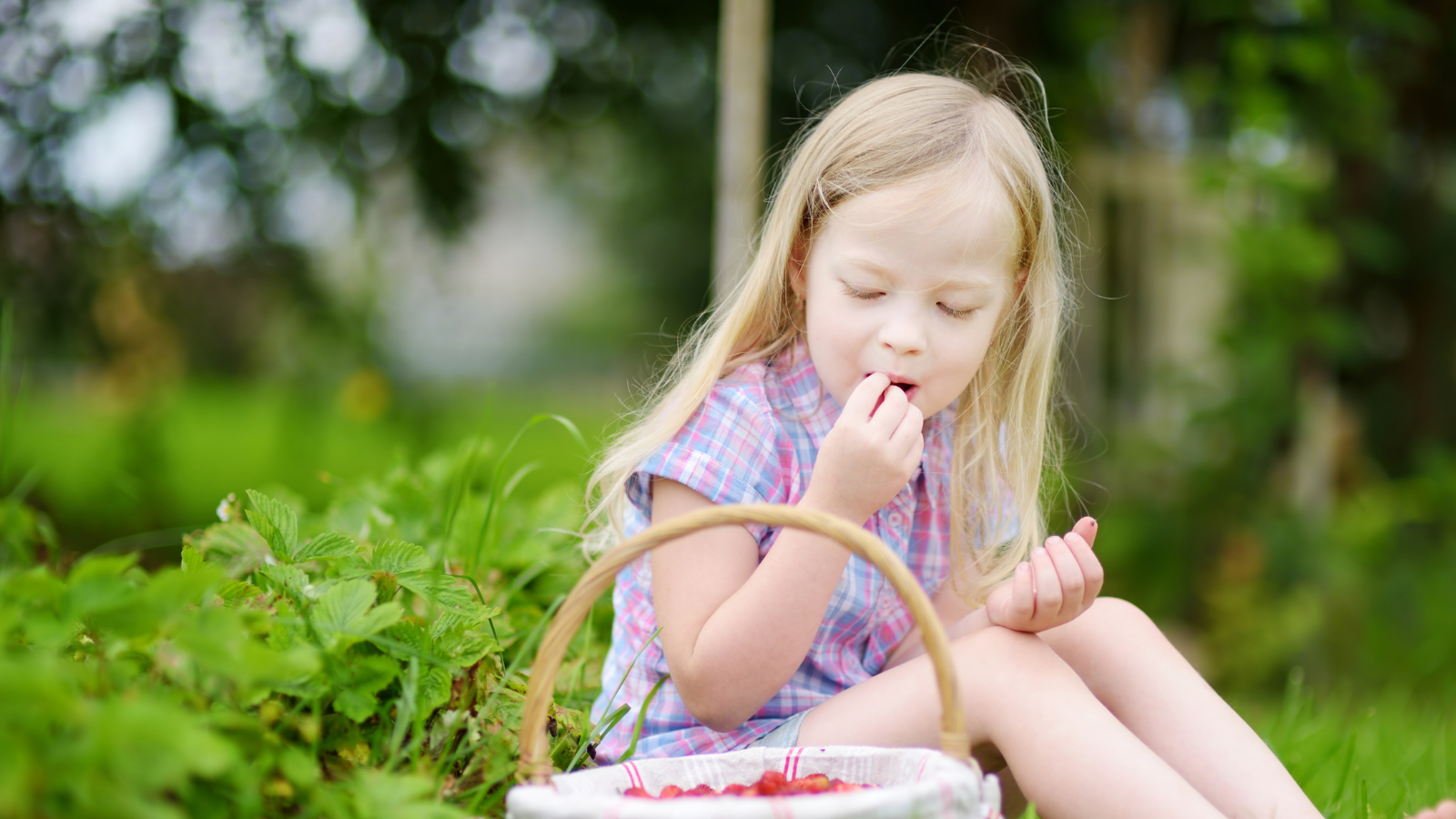
Many children instinctively love to pick, pluck, and taste things they find outdoors. They might turn up their noses at store-bought asparagus, but happily munch on a raw spear straight from the garden. When kids forage, the food is tied to an experience—and that experience makes it more exciting, personal, and enjoyable. It becomes their discovery, not just something handed to them on a plate.
4. It fosters gratitude and connection
When kids gather something from the wild and turn it into a tea, a snack, or a pressed flower, they develop reverence—not just for the item, but for the whole process of life.
How to Start Foraging With Kids
You don’t need to be an expert. You just need a beginner’s mindset and a few ground rules.
1. Learn the local landscape
Start by identifying 3–5 common, easily recognizable plants in your area. Great beginner options include:
- Dandelion (flowers and leaves)
- Wild blackberry
- Clover
- Plantain leaf
- Pine needles (for tea)
- Chickweed
Use a child-friendly field guide or nature app, but always double-check before tasting anything. Teach your child: “If you’re not 100% sure, don’t eat it.”
2. Forage responsibly
Model respectful practices:
- Take only what you need
- Harvest less than 10% of a patch
- Leave roots intact unless otherwise known
- Avoid plants near roadsides or sprayed areas
3. Use all the senses—safely
Have kids:
- Describe how the plant smells
- Compare leaf shapes and sizes
- Feel textures (fuzzy, smooth, sticky)
- Look for insects or signs of animals nearby
Always check for allergies and teach that not all wild plants are safe to touch or consume.
4. Make it playful
- Go on a “wild tea hunt” and collect pine needles or mint
- Play “plant detective” by finding different types of leaves
- Press flowers or dry herbs for crafts later
- Create a simple foraging journal or nature logbook
- Use egg cartons or muffin tins to sort your finds by category
What You’ll Need
- A small basket or cloth bag
- Field guide or ID app
- Nature journal (optional but fun)
- Wet wipes or cloth for hand cleaning
- Respectful curiosity
Simple Foraging Projects for Kids
- Pine Needle Tea (Vitamin C-rich and grounding)
- Dandelion Cookies or Salad
- Pressed Flower Bookmarks
- Wildflower ID Chart (make your own)
- Nature Art Using Collected Leaves or Seeds
- Download our Foraging Adventure Pack For Kids – a printable pack to help kids explore the outdoors safely while sparking curiosity about plants, seasons, and gratitude for nature’s gifts. There’s even a Dandelion Cookie recipe in this download!
Foraging as a Family Ritual
You don’t have to forage every day to make it meaningful. Even a monthly outing can become a cherished rhythm. Over time, your child will begin to recognize signs of seasonal change—buds in spring, berries in late summer, fallen seed pods in autumn.
You’re not just collecting plants—you’re building memory, tradition, and a relationship with the land that grows alongside your child.
A Final Note on Safety
Always forage in clean, chemical-free areas. If you’re unsure about identification, skip it. Teach children to ask first, taste last—and never eat something unless it has been properly identified by an adult who is certain of its safety.
If you’re just beginning, focus on learning before harvesting. Your presence, questions, and conversations are already planting something important: awareness and respect.
Final Thoughts
In a culture of fast food and faster living, foraging brings us back to what is slow, real, and rooted. It teaches children that food doesn’t always come from a box—it can come from a flower, a tree, or a patch of forgotten earth.
With every dandelion leaf or wild berry gathered together, you’re helping your child grow not just in knowledge—but in wonder.