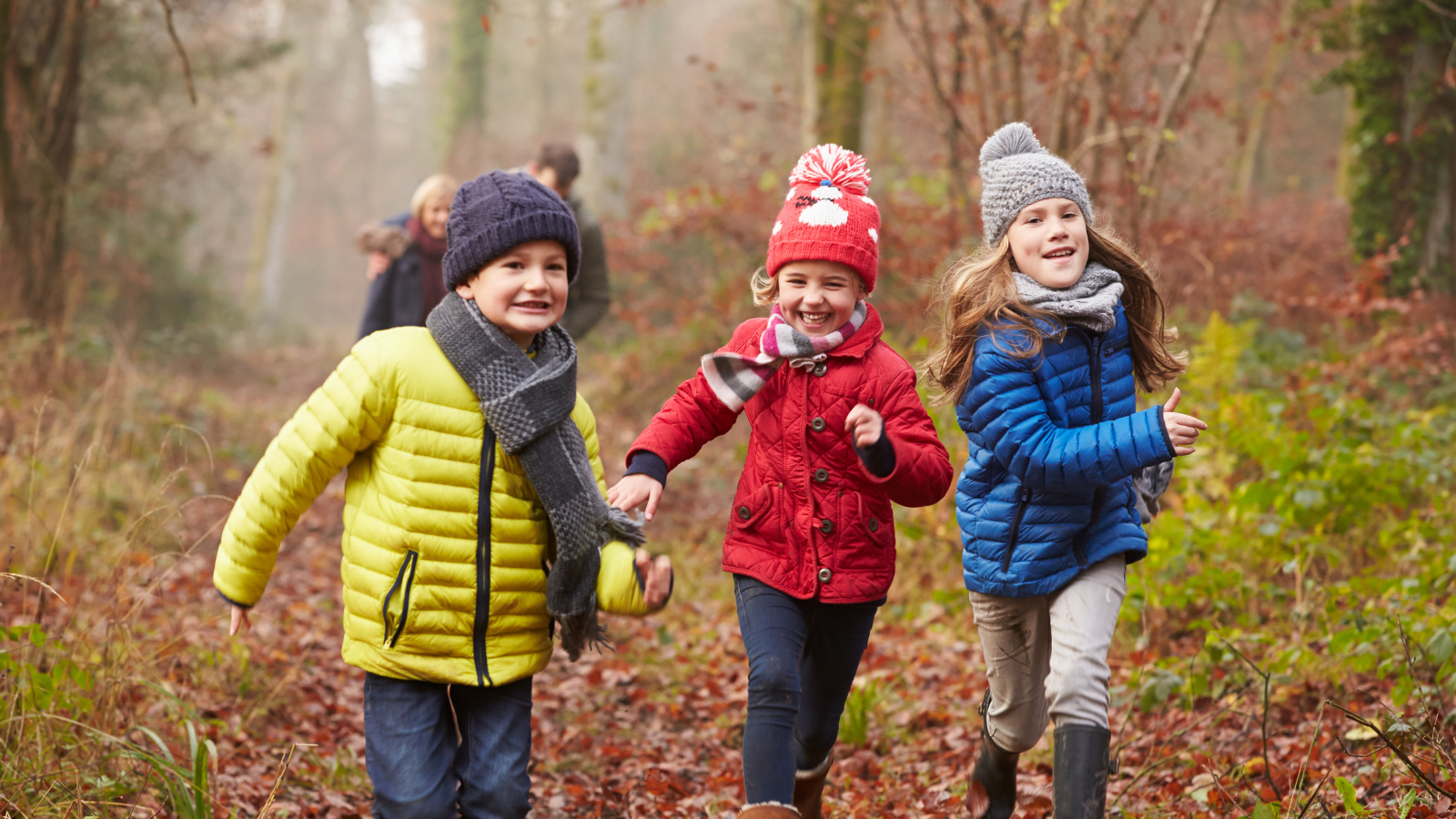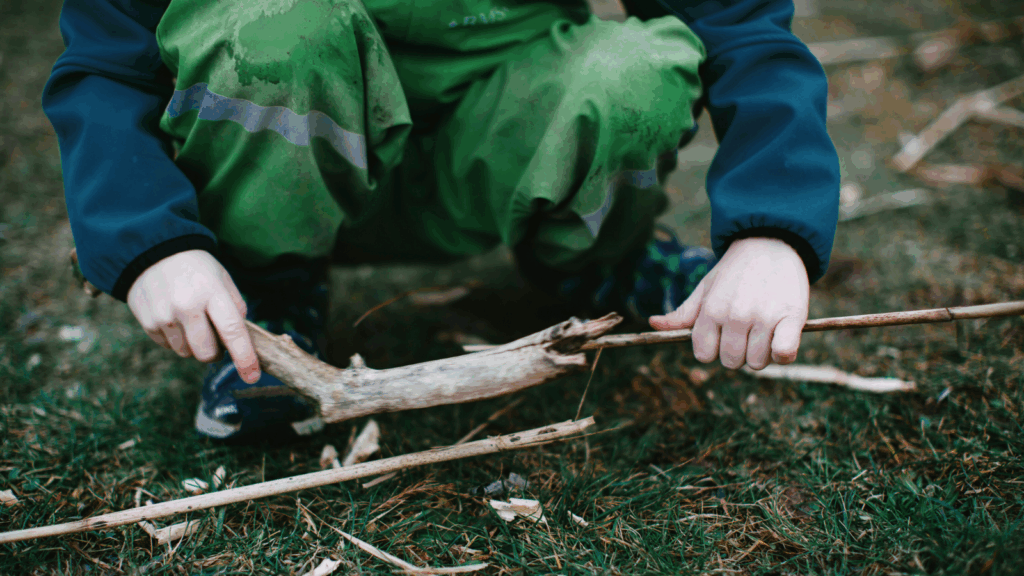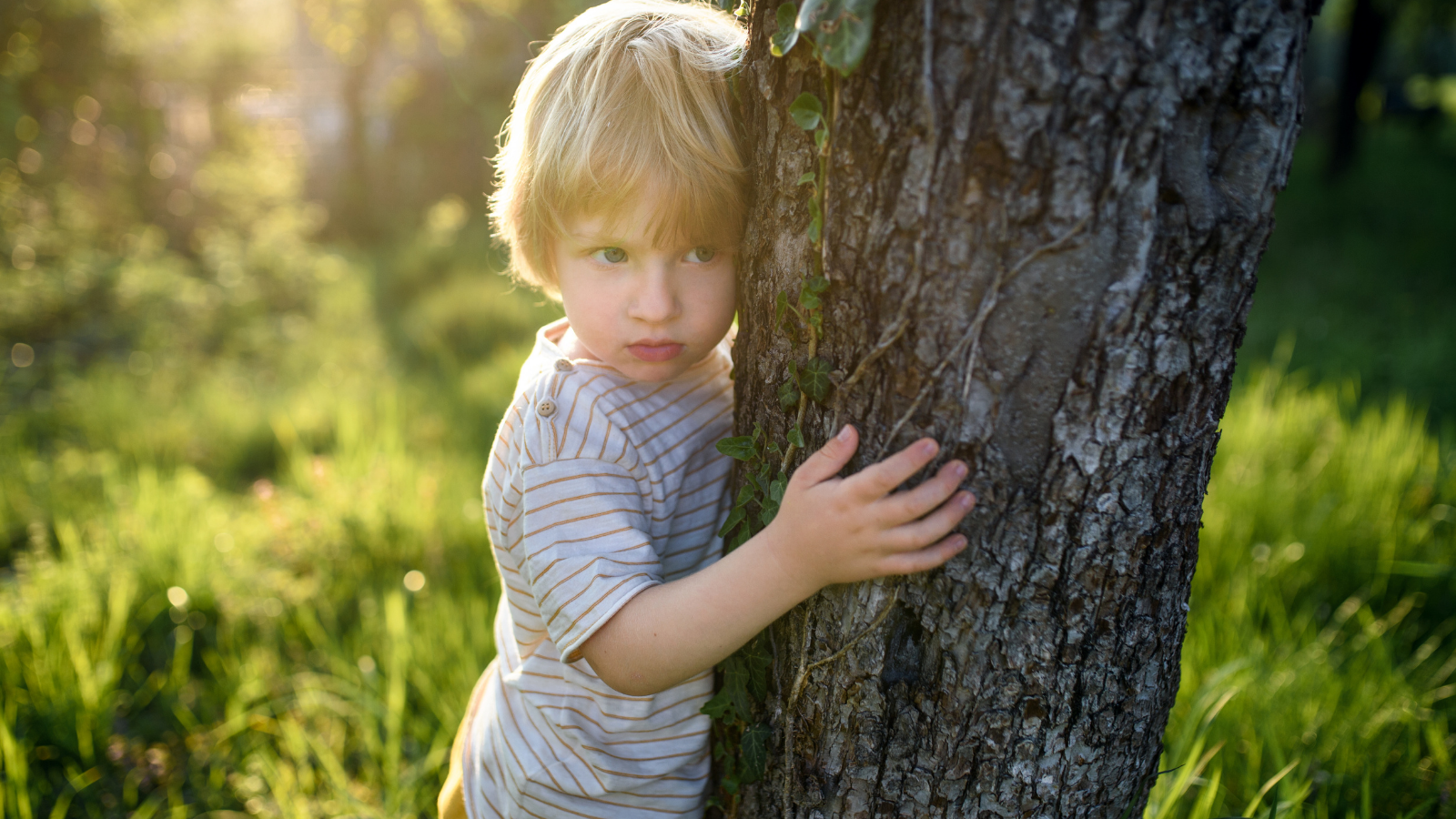
Before my son could speak in full sentences, he was hugging trees.
It started when he was barely crawling—he’d make his way over to a tree trunk, use it to steady himself, and then just stay there. Pressed up against the bark like he’d found an old friend. We’d go to the same park a few times a week, and he’d toddle from one tree to another, giving each a proper little hug. I only encouraged it a few times, but honestly, I didn’t need to. Hugging trees was simply his thing.
At first, I thought it was just cute and quirky (and it definitely was). But as I dove deeper into wildschooling, homeschool rhythms, and nature-based parenting, I started to understand: hugging trees is more than a sweet photo op. It’s a nervous system reset, an oxytocin booster, and an instinctual form of grounding that kids seem to know they need—even before we do.
So, Why Do Kids Hug Trees?
Turns out, there’s actual science behind what looks like a gentle, woodland cuddle.
1. Tree Hugs and the Oxytocin Connection
Oxytocin, often called the “love hormone,” is released when we cuddle, breastfeed, or snuggle someone we trust. It lowers stress, eases anxiety, and boosts emotional bonding. Some studies suggest that being in nature—especially physically touching trees—can spark similar oxytocin-like responses in the brain.
Basically, hugging a tree doesn’t just feel like a mama’s arms—it mimics some of the same chemical signals, too.
2. Regulation Through Stillness
Trees are steady. Strong. Quiet. In a child’s often loud and fast-moving world, trees provide grounding in every sense of the word. Pressing against a tree activates a child’s parasympathetic nervous system (the “rest and digest” mode), calming their heart rate and helping them self-regulate naturally.
And for kids like mine who are high-energy or emotionally sensitive? Trees became something solid to lean on—literally and emotionally.
3. Nature’s Sensory Therapy
Tree bark is textured. Cool. Alive. That sensory feedback is powerful for kids, especially those in homeschool or wildschool environments where hands-on learning is everything. Hugging trees becomes a full-body experience—engaging the senses, calming the mind, and centring the heart.
(And yes, we’ve definitely had to talk about not licking the trees… but that’s another story.)
4. Empathy and Earth Connection
When kids learn to love trees, they begin to see nature not as scenery—but as community. Hugging a tree is a child’s way of saying, “I see you. I care about you.” And that kind of empathy grows outward: to plants, animals, and people.
In our wildschooling routine, this kind of emotional connection to the natural world matters just as much as naming native species or learning weather patterns. The tree hugs are part of the curriculum.
A Simple Practice, A Big Impact
Now that my son is older, he still gives the occasional tree a hug. Sometimes it’s casual. Sometimes it’s a full-body, eyes-closed embrace. (He swears certain trees are “warmer” than others.)
And you know what? I’ve started joining him.
If you’re raising kids in a homeschool or wildschooling rhythm, consider adding tree hugging to your nature routine. It’s free. It’s grounding. It doesn’t require a worksheet. And it’s one of the fastest ways to help a child come back to themselves when they’re overstimulated, anxious, or just needing a moment of calm.
How to Start Your Own Tree Hugging Habit
- Invite your child to find a “friend tree” at your local park or yard.
- Hug a tree together before and after your outdoor homeschool lessons.
- Use tree hugging as a reset when emotions run high.
- Encourage observation: Is the bark rough or smooth? Can you feel the wind in the branches?
- Try it barefoot for extra grounding.
Let Kids Lead
I didn’t teach my child to love trees. The trees did that on their own.
As parents raising children close to the earth, our job isn’t to create connection—it’s to make space for it. Sometimes that looks like field guides and forest walks. Other times, it looks like a toddler toddling from trunk to trunk, arms wide open.
And sometimes, it looks like standing still beside your child, pressing your cheek to the bark of an old cedar, and remembering that you need the hug, too.